


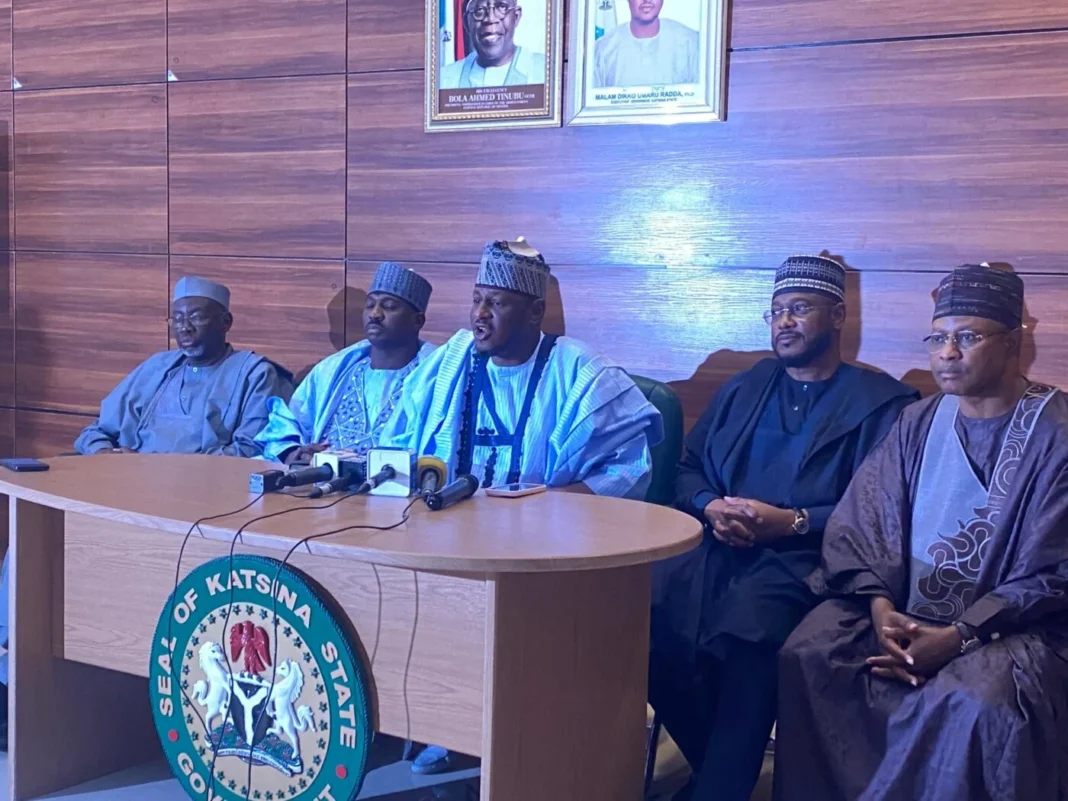
The North-West Governors’ Forum has convened a high-level policy dialogue in Kano on reducing multidimensional poverty through scaled social protection systems and innovative financing.
The summit, which drew policymakers, development partners, and technical experts from across the seven North-West states, focused on devising practical and sustainable strategies to tackle the drivers of multidimensional poverty.

The News Agency of Nigeria reports that the conclave paid particular attention to children, women, and other vulnerable groups in the North-West.
Declaring the dialogue open held in Kano, Governor Abba Yusuf said social protection should be treated not merely as a welfare measure but as a strategic investment in human capital, social stability, and economic growth.
Represented by his deputy, Murtala Sule-Garo, Yusuf highlighted Kano State’s steps to institutionalise social protection, including the 2025 Social Protection Policy Law and the establishment of the Social Protection Directorate under the Ministry of Humanitarian Affairs and Poverty Alleviation.
He said, “The state continues to invest in education, healthcare, skills acquisition, youth empowerment, and other social intervention programmes aimed at improving living standards.
“Addressing the scale of poverty and vulnerability across the region requires a shift from fragmented interventions to comprehensive, integrated, and data-driven social protection systems that are transparent, accountable, and reach those most in need.”
In her welcome address, the NWGF Director-General, Maryam Yahaya, described the dialogue as a defining moment for the region.
She added that in spite of its population, human capital, and economic potential, the North-West still faces high multidimensional poverty, poor health outcomes, insecurity, and a growing number of out-of-school children.
According to her, these challenges cross state boundaries and demand coordinated regional responses, urging that social protection should be seen as an investment in stability, productivity, and the future of the region.
Yahaya noted that the NWGF had adopted the North-West Peace, Security and Development Framework to tackle fragility and accelerate human development by linking peace, security, economic growth, and social wellbeing.
Delivering a goodwill message, UNICEF Deputy Representative, Dr Rownak Khan, highlighted severe challenges facing children in the North-West, including high maternal mortality, malnutrition, stunting, and limited access to essential services.
She observed that child-focused social protection programmes, such as unconditional cash transfers, were vital for improving access to healthcare, education, and nutrition.
One participant, Muhammad Haruna, told NAN that he was optimistic about the potential of strengthened regional cooperation.
He said that with innovative financing mechanisms and the expansion of social protection systems, the North-West could witness a substantial reduction in poverty levels.
Another participant, Halima Yusuf, emphasised the critical role of inclusive policies and community-driven initiatives in ensuring that social protection programmes reach the most vulnerable.
She called for continuous engagement between government agencies, development partners, and civil society organisations to design sustainable strategies that address both immediate needs and long-term development.