


The Federal Government has urged African countries to adopt a risk-based approach to implementing the Financial Action Task Force’s Recommendation 8, warning that excessive regulation of non-profit organisations could undermine humanitarian work while doing little to curb terrorism financing.
The call was made on Wednesday in Abuja during the 3rd Africa High-Level Civil Society Anti-Money Laundering and Counter Financing of Terrorism Conference, themed “Implementing FATF Recommendation 8 Correctly: Practices, Lessons Learned and Opportunities for Reform.”

The conference brought together anti-money laundering experts, government agencies, civil society organisations and international partners to examine Nigeria’s compliance with FATF standards and explore how its experience could guide other African countries preparing for future mutual evaluations.
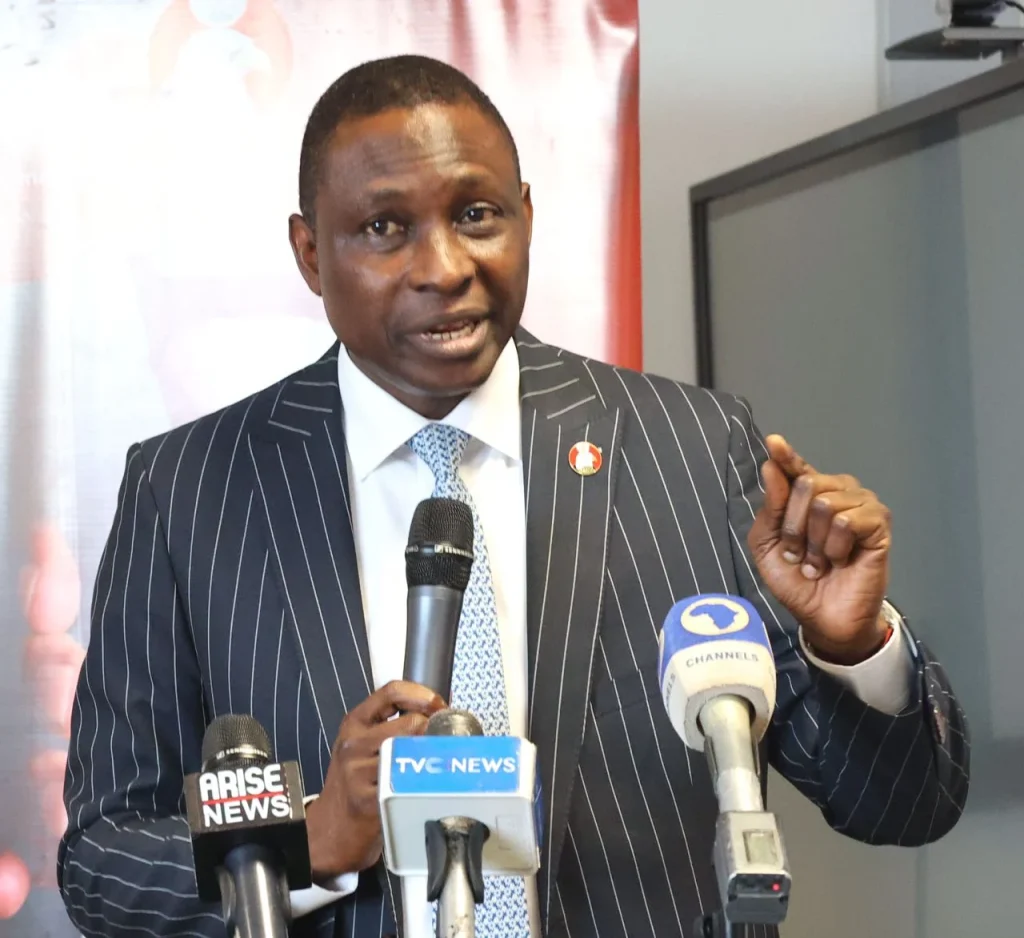
Representing the Chairman of the Economic and Financial Crimes Commission, Ola Olukoyede, the Director of the Special Control Unit Against Money Laundering, Harry Erin, said Nigeria’s experience showed that compliance with global anti-money laundering standards should strengthen institutions without restricting legitimate civil society activities.
He explained that FATF Recommendation 8 requires countries to identify only non-profit organisations genuinely vulnerable to terrorist financing and apply proportionate, risk-based measures.
“The Financial Action Task Force has made it abundantly clear that Recommendation 8 is not about regulating or restricting all non-profit organisations. Rather, it calls on countries to identify the subset of organisations that may be vulnerable to terrorist financing abuse and to apply focused, proportionate and risk-based measures.
“Equally important, countries are expected to protect legitimate charitable and humanitarian activities from unnecessary disruption,” Erin said.
He described civil society organisations as indispensable partners in humanitarian intervention, healthcare, education, women’s empowerment, assistance to internally displaced persons and peacebuilding across Africa.
Erin disclosed that collaboration among the EFCC, SCUML, the Nigerian Financial Intelligence Unit, the Office of the National Security Adviser, the Corporate Affairs Commission and civil society organisations enabled Nigeria to conduct a comprehensive National Terrorist Financing Risk Assessment of the non-profit sector.
According to him, the assessment replaced broad assumptions with evidence-based analysis, allowing regulators to focus on genuinely vulnerable organisations while reducing unnecessary regulatory burdens on legitimate charities.
“This experience has reinforced an important lesson. Effective implementation of FATF Recommendation 8 depends on trust. Trust between regulators and civil society. Trust between government and development partners. Trust built through transparency, consultation, information sharing and mutual respect,” he said.
He added that Nigeria’s reforms demonstrated that compliance with international standards should result in stronger institutions, greater transparency, enhanced public confidence and improved protection against terrorist financing.
Delivering the keynote address, the United Nations Special Rapporteur on the Promotion and Protection of Human Rights while Countering Terrorism, Prof. Ben Saul, commended Nigeria’s progress, noting that the country had been recognised as compliant with FATF standards since late 2025.
“I am pleased to acknowledge that Nigeria has been recognised as compliant with the FATF standards since late 2025. I also recognise the aspiration of Nigeria’s National Counter-Terrorism Centre to become a regional hub for counter-terrorism expertise. Nigeria obviously has a great deal of experience in combating terrorism,” he said.
Saul, however, cautioned governments against using anti-terror financing regulations to suppress civil society organisations.
He noted that the 2023 revision of Recommendation 8 made it clear that only specific categories of non-profit organisations considered vulnerable to terrorist financing should be subjected to additional oversight.
“Most non-profit organisations do not pose any risk of terrorist financing at all. Countries must periodically reassess which organisations are actually at risk and ensure that regulation remains risk-based and proportionate,” he said.
He warned that excessive registration, licensing, financial reporting, auditing and monitoring requirements could force non-profit organisations to divert scarce resources from humanitarian work, peacebuilding, human rights protection and efforts to prevent violent extremism.
Saul also said overregulation had led many banks to close the accounts of non-profit organisations or deny them financial services due to concerns about breaching anti-money laundering regulations.
“Government over-regulation and the complexity of terrorist financing controls have led some banks and financial institutions to de-risk from servicing non-profit organisations. This has resulted in account closures, blocked transactions and serious difficulties in delivering humanitarian assistance,” he said.
Earlier, the Executive Director of Spaces for Change, Victoria Ibezim-Ohaeri, said the conference marked 10 years of advocacy to ensure balanced implementation of FATF Recommendation 8 in Nigeria.
She attributed Nigeria’s progress to sustained political commitment, improved collaboration between regulators and civil society, and reforms that replaced confrontation with dialogue.
“Today marks the 10th year of our AML-17 advocacy journey in Nigeria. Looking back over these 10 years, we have seen policy shifts, legislative reforms and improvements in the way non-profit organisations are governed,” she said.
“Ten years ago, discussions between government and civil society were often defensive. There was no meeting point. Today, we have stronger collaboration, greater trust and meaningful participation by civil society in shaping reforms. These are lessons worth sharing with other African countries.”
She added that Nigeria’s experience had already begun influencing reforms across West Africa, demonstrating that meaningful compliance could be achieved through cooperation rather than confrontation.
Also speaking, Chairman of the Board of Spaces for Change, Samuel Diminas, said Africa continued to lose more than $88bn annually through illicit financial flows despite improvements in anti-money laundering frameworks.
“These are not abstract numbers. They represent schools that remain unbuilt, hospitals left unequipped, and opportunities denied to millions of Africans. Our task is to strengthen the integrity of our financial systems while safeguarding the civic space that holds those systems accountable,” he said.
The Registrar-General of the Corporate Affairs Commission, Hussaini Ishaq Magaji, reaffirmed the commission’s commitment to supporting Nigeria’s anti-money laundering reforms through the management of the country’s Beneficial Ownership Register and continued collaboration with relevant agencies and civil society organisations.
Nigeria strengthened its anti-money laundering and counter-terrorism financing framework through legislative and institutional reforms, including comprehensive risk assessments of the non-profit sector and enhanced collaboration among regulatory agencies and civil society organisations.
The reforms culminated in Nigeria’s recognition as compliant with FATF standards in late 2025, a milestone stakeholders said positions the country as a model for other African nations seeking to balance financial integrity with the protection of legitimate humanitarian and civil society activities.