


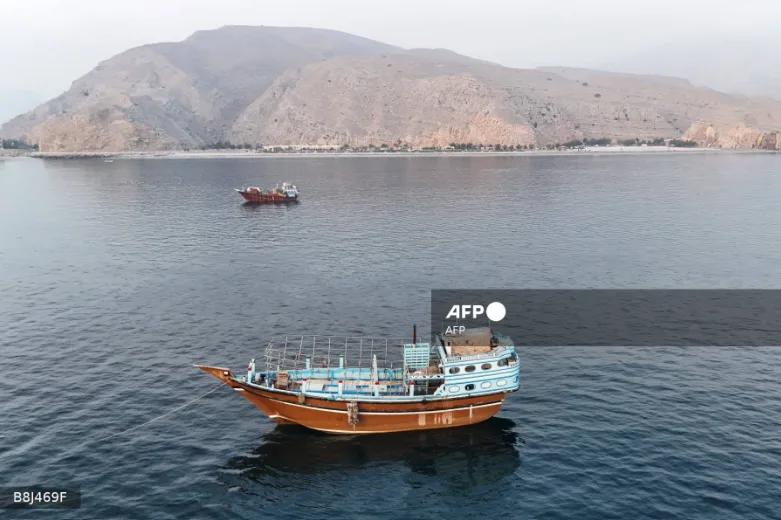
Strait of Hormuz traffic slowed over the weekend after a vessel was struck while transiting the waterway on Saturday, and a fresh exchange of strikes between the United States and Iran strained their preliminary deal to end the conflict.
In total, 29 commodity vessels crossed on Saturday and 12 transited on Sunday, according to data from the maritime tracking firm Kpler.

Sunday’s figures marked a sharp decline from last week, when a memorandum of understanding signed by Tehran and Washington on June 15 boosted traffic through the strait to its highest level since the start of the Middle East war, reaching 70 crossings on Wednesday, according to Kpler.
Despite Iran’s warning against using unapproved shipping lanes, vessels continued to take several routes through the waterway over the weekend.
After a vessel was struck while transiting the strait on Saturday morning, ships continued for several hours to use a southern corridor through Omani waters before traffic appeared to slow, according to the Kpler-owned website MarineTraffic.
The website tracks only vessels with active transponders, meaning additional ships may have crossed with their signals switched off.
More ships entered the Gulf over the weekend than departed, reversing a trend seen over the previous week, when efforts focused on evacuating seafarers stranded in the Gulf.
A UN-led operation to evacuate 11,000 seafarers was suspended on Thursday after a vessel was struck in the Gulf of Oman.
Four tankers and a container ship used the southern Omani corridor to enter the Gulf on Sunday, escorted by US Navy vessels, according to a post on X by HFI Research.
No vessels used that corridor to exit the Gulf on Sunday, according to Kpler.
Total figures may rise further as crossings are identified retrospectively, notably through satellite imagery.
Iran said Monday that it had held its first meeting with Oman to discuss managing the strait, as Washington warns it will not accept transit fees for using what it considers an international waterway.
AFP